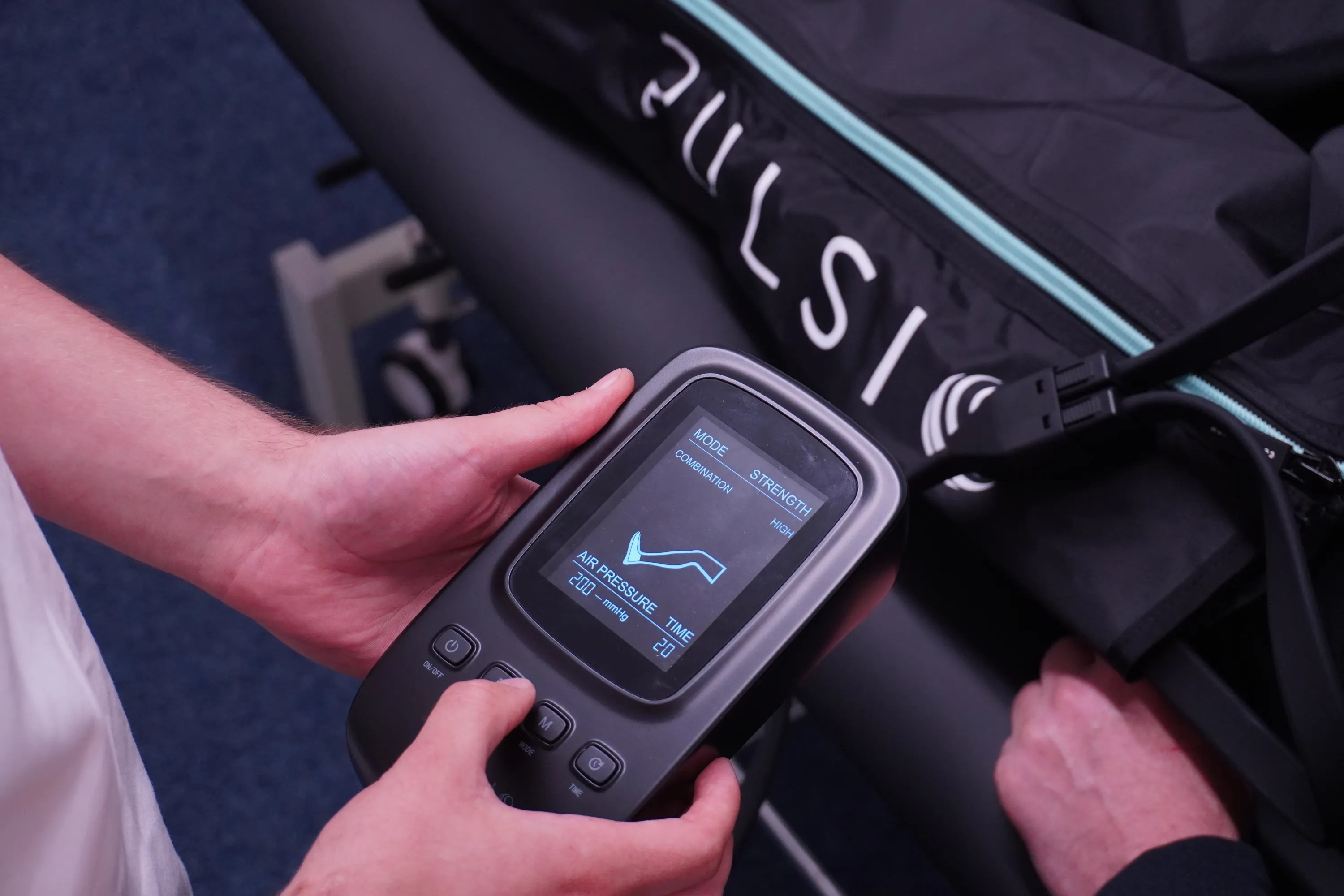
Compression boots have become one of the most talked-about recovery tools in endurance sport. From elite athletes to amateur Hyrox competitors, everyone seems to have an opinion — but the question I get asked most is: "Do they actually work, or is it just expensive placebo?"
The honest answer is: they work, but how and when you use them matters enormously.
How Compression Boots Work
Pneumatic compression boots (like the Pulsio system we use at Muscle Relief Therapy) use sequential air pressure to mimic the pumping action of muscle contractions. Chambers in the boot inflate and deflate in a wave pattern from the foot upward, driving blood and lymphatic fluid out of the extremities and back toward the core.
This mechanism does several beneficial things:
- Enhances venous return — moves deoxygenated blood back to the heart more efficiently than passive rest
- Flushes metabolic waste — lactic acid and other by-products of exercise are cleared from muscle tissue faster
- Reduces oedema — swelling from intense exercise or injury is reduced through improved lymphatic drainage
- Decreases perceived muscle soreness — multiple studies show significant reductions in DOMS when compression therapy is used post-exercise
What the Research Says
The evidence for pneumatic compression therapy is actually quite robust, particularly for:
- Reducing DOMS in the 24–72 hours post-exercise
- Improving perceived recovery and readiness to train
- Accelerating clearance of blood lactate post-high-intensity exercise
It's worth noting that most of the research uses sessions of 20–30 minutes — which is exactly the protocol we use in our Recovery Session (£55).
Compression boots are not a replacement for sleep, nutrition and training smart — but as an adjunct to good recovery habits, they consistently show meaningful benefits, particularly after events as demanding as Hyrox.
When Are They Most Effective?
Immediately post-exercise or event: The 1–6 hour window post-race is when compression therapy has the greatest impact on metabolic waste clearance.
The day after a race or heavy session: If you weren't able to use compression immediately post-event, a session 12–24 hours later still significantly reduces DOMS.
During a heavy training block: Using compression boots between sessions (particularly when training twice per day) can meaningfully improve recovery quality between sessions.
When Are They Less Effective?
Compression boots aren't particularly useful for:
- Active tissue healing (a sprained ankle, for example, needs a different approach)
- Addressing specific muscular knots or adhesions — that's where the manual massage component of our Recovery Session comes in
- General relaxation without prior high physical demand
Why We Combine Boots with Massage
The Recovery Session at Muscle Relief Therapy pairs 30 minutes of Pulsio compression boots with 30 minutes of targeted sports massage. This combination works synergistically — the boots prepare the tissue by improving circulation, while the massage addresses the specific areas that took the most punishment during your training or race. Together, they achieve more than either treatment in isolation.
Ready to Book a Session in Swansea?
Most appointments available within 48 hours. Call or book online today.