Hyrox has grown from a niche fitness race into one of the most popular competitive events in the world — and Swansea's fitness community has embraced it completely. But while athletes obsess over their SkiErg scores and sled push weights, one critical component of Hyrox performance is consistently overlooked: recovery.
What Makes Hyrox Different — and Harder on Your Body
Most endurance events load specific muscle groups repeatedly. Hyrox is unusual in that it demands everything from your body across a single race: 8km of running combined with 8 demanding functional stations that collectively hammer your legs, posterior chain, shoulders, core and grip strength simultaneously.
This total-body demand means that post-race, every major muscle group is depleted. The result is a level of soreness and stiffness that most athletes aren't prepared for, particularly after their first event.
One of my Hyrox clients described the morning after their first race as "waking up and not being able to get off the toilet unaided." Sound familiar? This is completely normal — but it doesn't have to be your reality with the right recovery in place.
The Three Phases Where Massage Makes the Biggest Difference
1. During Your Training Block
Regular sports massage — fortnightly for most Hyrox athletes — keeps muscles supple and responsive as your training volume builds. It allows me to identify early warning signs of overuse injuries (the most common being quad tightness, IT band issues, and rotator cuff problems from SkiErg training) before they become race-threatening problems.
A Full Body Sports Massage (£70) during training block includes deep tissue work, active release techniques, fascia manipulation, and massage gun treatment — addressing the full-body demands of Hyrox training.
2. Race Week Preparation
Timing your pre-race massage correctly is crucial. Too close to race day and you'll feel heavy on the start line; too far out and you lose the benefits. The sweet spot is 4–5 days before your event.
A pre-race session focuses on activating rather than loading — increasing circulation, releasing any accumulated training tightness, and leaving your muscles ready to fire at maximum capacity on race day.
3. Post-Race Recovery
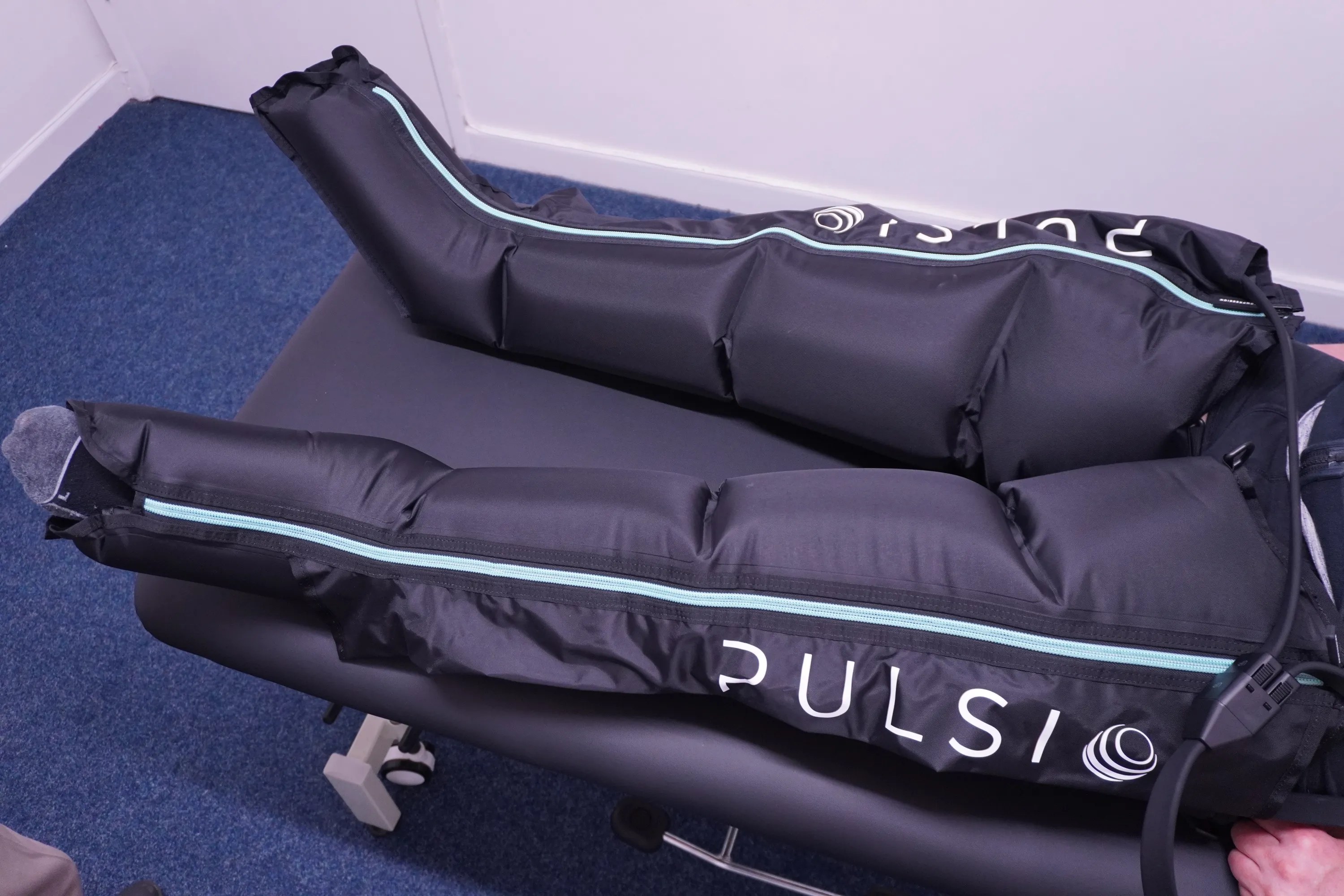
The 24–48 hours after your Hyrox event are the most critical window for recovery. This is where our Recovery Session (£55) comes in: 30 minutes in the Pulsio compression boots to flush metabolic waste and improve circulation, followed by 30 minutes of targeted sports massage to address the specific areas that took the most punishment during your race.
What Muscles Take the Biggest Hit in Hyrox?
Based on treating multiple Hyrox athletes post-race, the consistent pattern is:
- Quadriceps and hip flexors — from the sandbag lunges, wall balls and continuous running
- Hamstrings and glutes — from sled pulls and the posterior chain demands of running under fatigue
- Trapezius and rotator cuff — from the SkiErg and rowing stations
- Calves — from 8km of running plus plyometric burpee jumps
- Forearms and grip — from the farmers carry, often a late-race weakness
The Evidence Behind Sports Massage for Performance
Research consistently shows that sports massage reduces delayed onset muscle soreness (DOMS), improves perceived recovery, and helps athletes return to training quality more quickly after high-intensity events. For Hyrox athletes who are often racing multiple events per season and need to maintain training consistency between events, this is significant.
If you're training for Hyrox in Swansea, the Hyrox Recovery Programme at Muscle Relief Therapy is built specifically around your race calendar — from your first training block all the way to your finish line.
Book Your Hyrox Recovery Session
Ready to Book a Session in Swansea?
Most appointments available within 48 hours. Call or book online today.